 cashd
cashdBasketball Cards
Resale value
There's no single "typical" basketball card price — a common card is worth cents and a graded Jordan rookie is worth thousands. Scan your card in Cashd to price the exact player, set, and condition against current eBay listings.
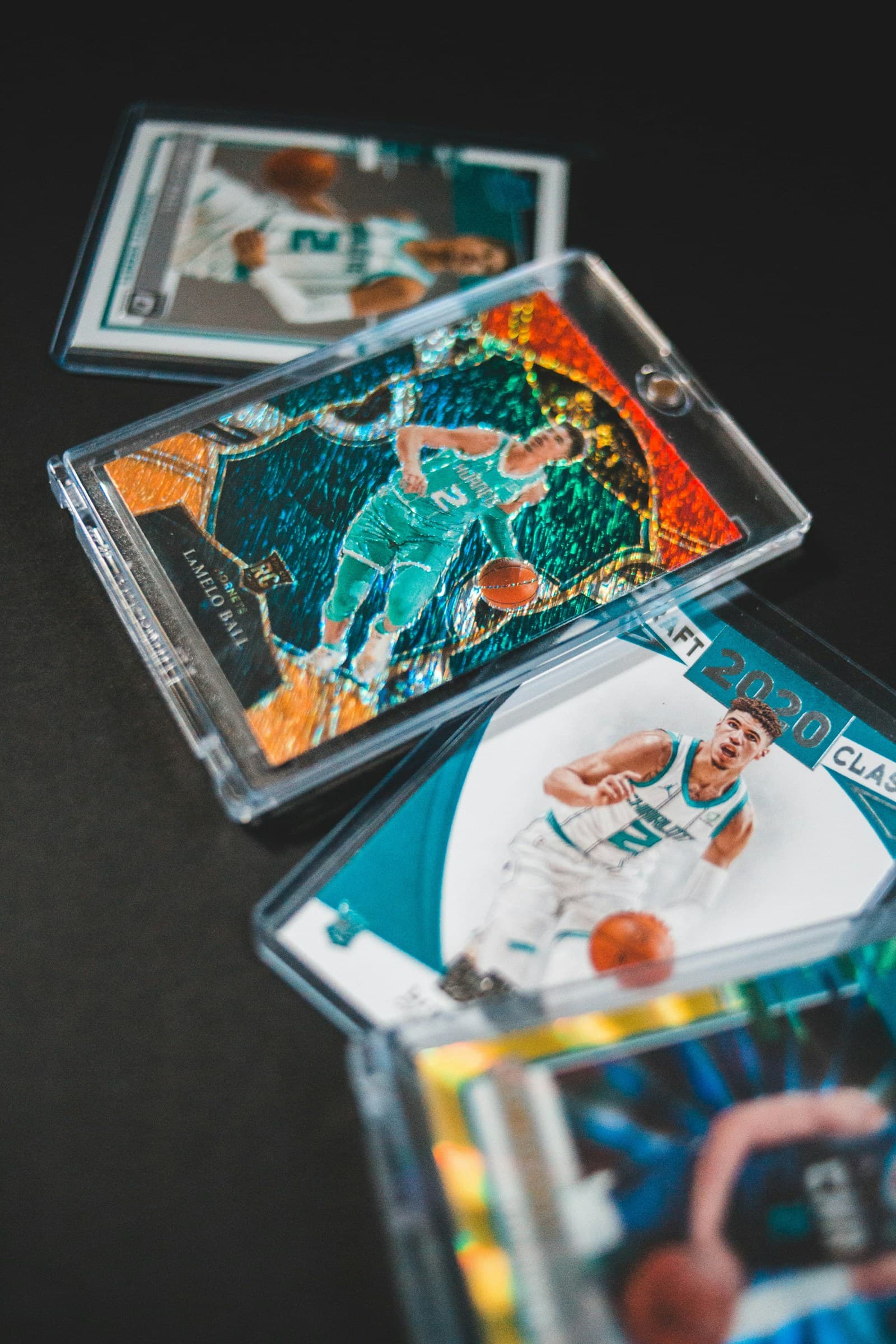
Priced item by item. Scan yours for a price on your exact item.
Most-Searched Basketball Cards by Player
The players whose cards drive the market, and the rookie cards collectors actually look for. Base versions of these cards are far more affordable than graded or parallel copies.
- Michael Jordan1986-87 Fleer #57 is the iconic rookie card; 1984-85 Star is the pre-rookie. Graded copies are the most traded vintage basketball cards there are.
- LeBron James2003-04 Topps Chrome #111 is the flagship rookie; 2003-04 Upper Deck and the Exquisite rookie patch autograph sit in much higher tiers.
- Kobe Bryant1996-97 Topps Chrome #138 and the 1996-97 Topps base rookie are the key cards; Refractor versions trade far higher.
- Stephen Curry2009-10 Topps Chrome and Panini rookies; Refractors and autographs are where the big numbers are.
- Victor Wembanyama2023-24 Panini Prizm rookies are the modern headline card — prices swing with his season.
- Luka Dončić2018-19 Panini Prizm is his main rookie; Silver Prizm and numbered colors are separate, higher markets.
- Giannis Antetokounmpo2013-14 Panini Prizm rookie — the base card and its Silver parallel are the most traded.
- Anthony Edwards, Ja Morant & Zion Williamson2019-20 and 2020-21 Prizm rookies — volatile, performance-driven prices.
- Caitlin Clark2024 WNBA rookie cards (Prizm and others) created a new market almost overnight.
- Kevin Durant, Tim Duncan & Shaquille O'NealTopps Chrome and early-'90s rookies — steady demand, especially graded.
- Larry Bird & Magic JohnsonThe 1980-81 Topps card featuring Bird, Magic, and Julius Erving is one of the hobby's classic vintage cards.
- Junk wax era (1987–1994)Commons and most stars from these years were overproduced. A full binder is often worth less than the time it takes to list it — pull out the key rookies first.
What moves the price
- 01
Rookie cards carry most of the value — a player's first-year card from a major set (Fleer, Topps Chrome, Panini Prizm) is what collectors chase.
- 02
Grade can multiply the price: a PSA 10 of a sought-after rookie routinely sells for several times a PSA 9 of the identical card.
- 03
Parallels and serial numbers matter — a numbered or colored Prizm/Refractor version of a rookie is a different, pricier card than the base version.
- 04
Autographs and game-used patches ("RPA" cards) sit in their own tier far above base rookies.
- 05
Current performance moves modern cards fast — a big season or playoff run shows up in prices within days.
- 06
Cards from 1987–1994 were mass-produced ("junk wax") — outside a few key rookies, they're rarely worth more than a few dollars.
The full story
A basketball card's value comes down to three things: the player, the specific card (set, year, and parallel), and its condition or grade. The same player can have a $2 card and a $20,000 card — a base card from a mass-produced set and a graded rookie from a key set are completely different markets.
The cards that carry real money are almost always rookie cards of Hall of Fame-level players (Jordan, LeBron, Kobe, Curry) and of current stars the hobby is betting on (Wembanyama, Luka, Anthony Edwards). Most everything else — including the huge stacks of late-'80s and '90s cards sitting in closets — sells for a few dollars at most. Scan yours in Cashd and it prices your exact card against current eBay sales.
Questions
Are my old basketball cards worth anything?
Most late-'80s and '90s cards are worth very little because they were printed in enormous quantities. The exceptions are key rookie cards of all-time greats — Michael Jordan's 1986-87 Fleer, Shaquille O'Neal's and Kobe Bryant's rookies — especially in high grades. Scan a few in Cashd to see which ones stand out.
What is the most valuable basketball card?
Top-end prices come from Michael Jordan and LeBron James rookies in near-perfect grades, plus one-of-one autographed patch cards of modern stars — those can reach six or seven figures. A typical collection won't have one, but graded rookies of stars regularly sell in the hundreds to thousands.
Should I get my basketball cards graded?
Only for cards worth grading: rookies of star players in clean condition (sharp corners, good centering, no surface scratches). Grading fees are wasted on common cards — check what the raw card sells for first.
How does Cashd price my basketball card?
Cashd identifies the player and card from your photo and prices it against current comparable eBay listings, rather than a generic category guess.
Got a Basketball Cards?
Snap it and get a price for your exact one.
Cashd may earn a commission from eBay links on this page. Prices are market data, not an appraisal.