 cashd
cashdHow Much Are Trading Cards Worth? Pokémon, Magic & Sports Cards
Trading cards are unusual among resale categories in that real, continuously-updated market pricing genuinely exists for most cards — collectors have made card pricing one of the most transparent resale markets there is, largely through TCGplayer and Cardmarket.
Get your exact price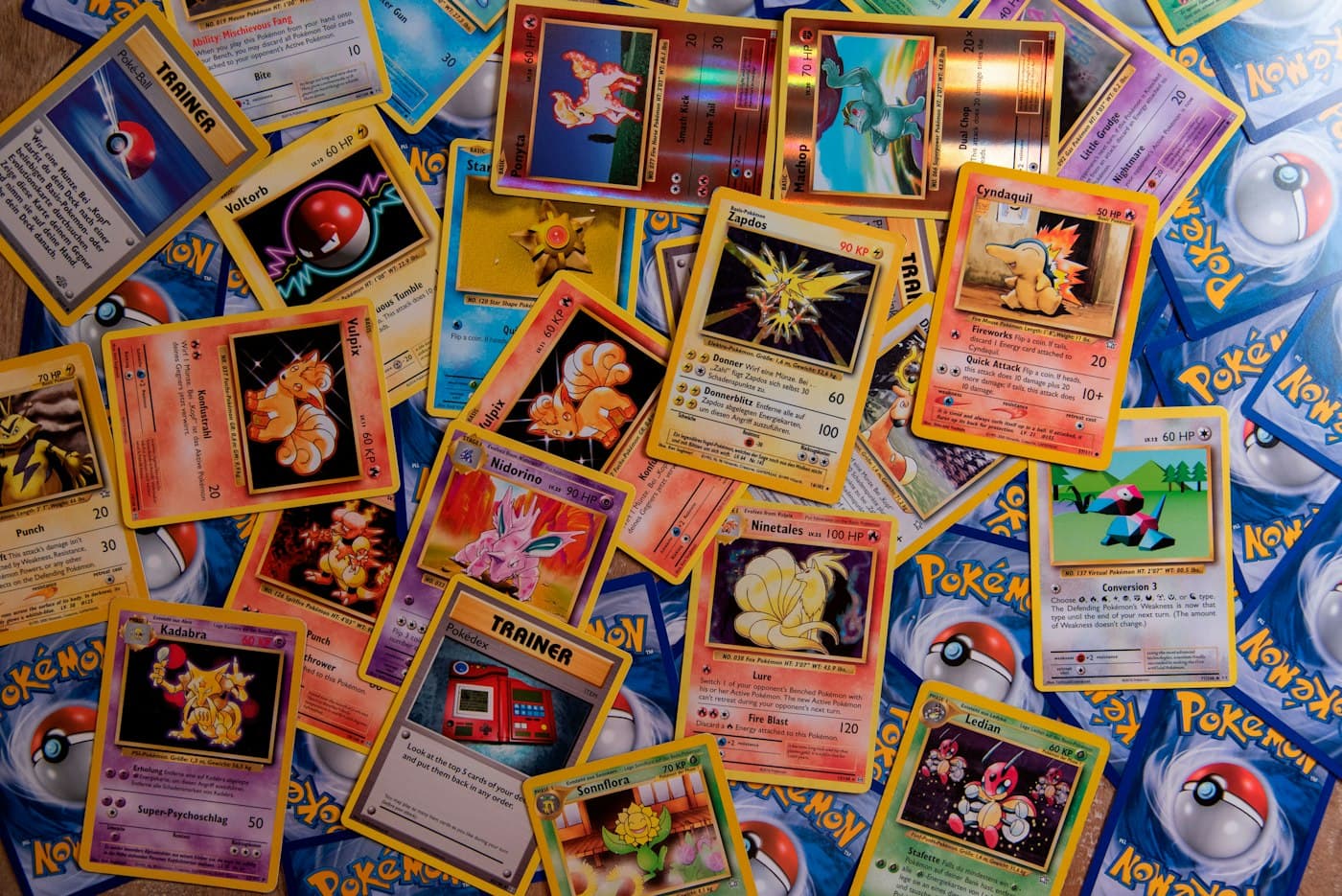
Grading is the single biggest lever most sellers underuse — a raw card and a professionally graded copy of the exact same card can differ enormously in price, because grading removes the buyer's uncertainty about centering, edges, corners, and surface condition.
How Cashd prices this
Cashd pulls real TCGplayer market pricing for Pokémon cards and real TCGplayer pricing for Magic: The Gathering cards directly — not an estimate, an actual current market price for that specific card and set. Grading changes the number substantially: a professionally graded card (PSA/BGS/CGC, especially at a 9+ grade) can be worth several times a raw copy of the same card.
What moves the price
- 01
Always identify the exact set, not just the card name — the same card name can vary wildly in value across different print runs/sets.
- 02
A raw (ungraded) card in visibly excellent condition is still worth submitting for grading if the card's base value is high enough to justify grading fees.
- 03
Foil/holo versions and first-edition prints are priced completely separately from standard prints — don't assume they're the same card.
- 04
Store cards in sleeves/toploaders before photographing or shipping — visible edge wear from mishandling is one of the most common value-killers.
- 05
Check recent sold listings, not just active asking prices, when estimating value yourself — active listings are often priced optimistically.
- 06
Vintage cards (pre-2000) are priced very differently from modern cards even at the same nominal rarity — condition history and population reports matter more.
Trading Cards by brand
How condition affects the price
Cashd applies condition as a multiplier on the base estimate. These are the same tiers the estimator uses.
- New / Mint140%
- Like New115%
- Excellent105%
- Good100%
- Fair70%
- Poor35%
Questions
Should I grade my card before selling?
If the card's estimated raw value comfortably exceeds grading fees (typically $15-50+ depending on service and turnaround), grading a genuinely high-condition card can be worth it — for lower-value cards it usually isn't.
What's the real difference between raw and graded pricing?
A graded card removes condition uncertainty for the buyer, which is worth a real premium — but a low grade (below 7-8) on an expensive card can sometimes be worth less than an ungraded card with an honest, appealing description.
Does condition matter even for common, low-value cards?
Less in dollar terms, but yes proportionally — a heavily played common card can be worth a fraction of a near-mint copy of the exact same card, even if both amounts are individually small.
Selling trading cards?
Snap yours and get a price for your exact item.